
Severity: Warning
Message: Undefined array key "articleIDUniqueCode"
Filename: frontend/article.php
Line Number: 189
Severity: 8192
Message: substr(): Passing null to parameter #1 ($string) of type string is deprecated
Filename: frontend/article.php
Line Number: 189
Severity: Warning
Message: Undefined array key "articleIDUniqueCode"
Filename: frontend/article.php
Line Number: 190
Severity: 8192
Message: substr(): Passing null to parameter #1 ($string) of type string is deprecated
Filename: frontend/article.php
Line Number: 190
Severity: Warning
Message: Undefined array key "articleIDUniqueCode"
Filename: frontend/article.php
Line Number: 213
Severity: 8192
Message: substr(): Passing null to parameter #1 ($string) of type string is deprecated
Filename: frontend/article.php
Line Number: 213
Severity: Warning
Message: Undefined array key "articleIDUniqueCode"
Filename: frontend/article.php
Line Number: 214
Severity: 8192
Message: substr(): Passing null to parameter #1 ($string) of type string is deprecated
Filename: frontend/article.php
Line Number: 214

We use cookies to ensure our website works properly and to personalise your experience. Cookies policy
Severity: Warning
Message: Undefined array key "articleIDUniqueCode"
Filename: frontend/article.php
Line Number: 424
Viswanadha institute of pharmaceutical sciences, mindhivanipalem, anadhapuram, visakhapatnam.
This study investigates the effect of milk and water kefir granules on sugar solution, focusing on their fermentation characteristics and potential applications in the production of functional beverages. Kefir grains, which are symbiotic cultures of bacteria and yeasts (SCOBY), were introduced into sugar solutions to evaluate their fermentation processes, including pH change, sugar consumption, and the production of lactic acid, alcohol, and other metabolites. The two types of kefir granules?milk and water?were compared to determine any differences in fermentation rate, microbial diversity, and the final composition of the fermented solution. Results indicate that both milk and water kefir grains were capable of fermenting sugar solutions, with milk kefir demonstrating a more complex microbial profile and a greater production of lactic acid, while water kefir showed higher ethanol content and a faster fermentation rate. The findings suggest that both kefir types can be used for producing probiotic-rich beverages, with the milk kefir being more suited for dairy-based functional drinks, while water kefir may offer a suitable alternative for non-dairy and vegan applications. The study also explores the broader implications of kefir fermentation in enhancing the nutritional and health-promoting properties of sugar-based substrates.
Effect of Milk and Water Kefir Granules in Sugar Solution
Kefir is a traditional fermented beverage that has been consumed for centuries, primarily known for its probiotic properties and health benefits. It is typically made by fermenting milk or sugar water with specific symbiotic cultures of bacteria and yeast (SCOBY). There are two main types of kefir: milk kefir and water kefir. Both types are produced through the fermentation of a sugar-rich solution, but they differ in the medium used and the microbial communities involved.
The granules (or grains) in both milk and water kefir are composed of polysaccharides, proteins, and various microorganisms. These microorganisms?lactic acid bacteria, yeasts, and other microbes?carry out the fermentation process, which converts sugars into various end-products, including alcohol, organic acids, and carbon dioxide. This fermentation not only preserves the sugar solution but also imparts various health benefits, including improved digestion and gut health. The focus of this research topic is to explore the effect of milk and water kefir granules in sugar solutions. Specifically, it examines how these kefir granules impact the fermentation process in a sugar solution, including changes in:
Understanding how milk and water kefir granules behave in a sugar solution is crucial for optimizing kefir production, both in terms of health benefits and taste. It also contributes to a broader understanding of fermentation science, particularly how different kefir grains interact with varying sugar sources and environmental conditions.
This topic is of interest to researchers in microbiology, food science, and nutrition, and could have implications for the food and beverage industry, where kefir-based products are becoming increasingly popular as functional foods.
MATERIALS AND METHODS
PREPARATION OF WATER KEFIR
Ingredients:
Requirements:
? ? ? ?
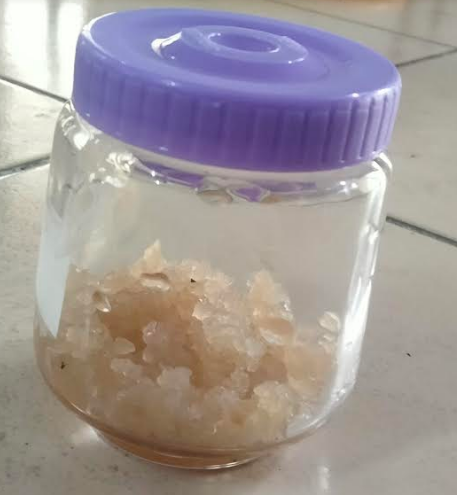
? ? ? ? ? ? 
? ? ? ?
Fig.3.1 WATER KEFIR SAMPLE
Preparation of primary? culture(water kefir)
? ? ? ?
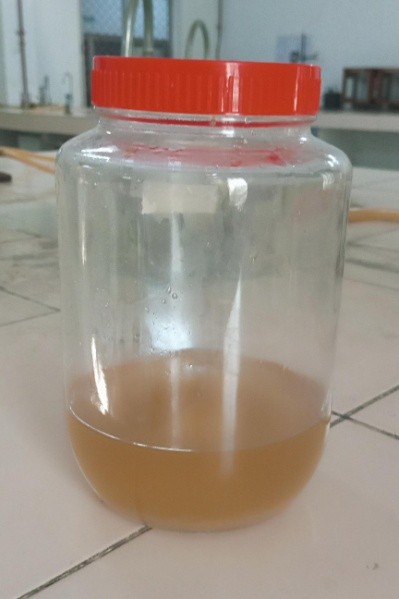
? ? ? ? ? ? 
? ? ? ?
Fig. 3.2 WATER KEFIR PRIMARY CULTURE
PREPARATION OF MILK KEFIR
?Ingredients:
Requirements:
? ? ? ?
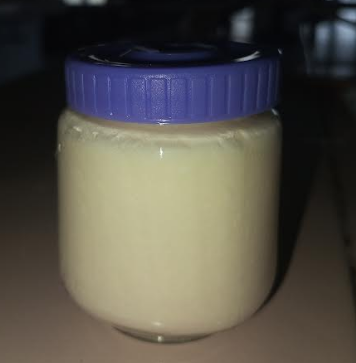
? ? ? ? ? ? 
? ? ? ?
Fig.3.3 MILK KEFIR? SAMPLE
Preparation of primary culture (Milk Kefir)
The grains were stored in the fridge
?? ? ? ?
? ? ? ? ? ?
? ? ? ?
Fig.3.4 MILK KEFIR ?PRIMARY CULTURE
ESTIMATION OF SUGAR BY UV-VISIBLE SPECTROSCOPY
INGREDIENTS :
?
? ? ? ?
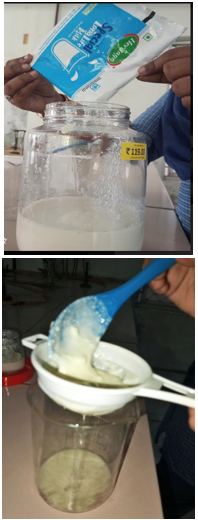
? ? ? ? ? ? 
? ? ? ?
REQUIREMENTS
UV ?VISIBLE SPECTROPHOTOMETER
PREPARATION OF SOLUTIONS
Glucose solution (100mg %) : 100 mg of standard sulphur free sugar is dissolved in 100ml of distilled water.
2N NaOH : 8g of sodium hydroxide pellets is dissolved in 100 ml of distilled water to form 2N NaOH.
PREPARATION OF DNSA SOLUTION :
PREPARATION OF WATER KEFIR SAMPLE:
PROCEDURE FOR WATER KEFIR :
PREPARATION OF MILK KEFIR SAMPLE :
PROCEDURE FOR MILK KEFIR
RESULTS AND DISCUSSIONS: ?
Milk and Water kefir beverages were prepared. The absorbance of the prepared drinks were estimated and compared with the standard sugar water and milk using UV-VISIBLE SPECTROPHOTOMETER. We have observed? reduction in the sugar concentration of kefir fermented beverages .Kefir has a? tangy flavor?and a consistency similar to drinkable yogurt. Due to the fermentation process, kefir? tasted slightly carbonated. We have observed the biomass of kefir grains. Initially we have taken 20g of water and milk kefir grains. For 1st culture of water kefir the grains weight increased gradually to 28g for 2nd culture it increased up to 31g & for 3rd? culture it increased to 34g. Later the mass of the kefir grains were decreased. Same as for milk kefir, 20g lo kefir grains were taken. For 1st culture it increases upto 26g for 2nd culture it increases up to 29g & for 3rd culture it increases up to 30g after the 3rd culture the weight of the kefir grains were decreased.
ESTIMATION OF ABSORBANCE OF SUGAR CONCENTRATION IN WATER KEFIR
Standard????????????????
Table 5.1 Results of absorbance of? standard
|
s.no |
Concentration (?g/ml) |
Absorbance ( nm) (standard) |
|
1. |
0 |
0 |
|
2. |
80 |
0.220 |
|
3. |
160 |
0.426 |
|
4. |
240 |
0.650 |
|
5. |
320 |
0.854 |
? ? ?? ? ? ?
? ? ? ? ? ? 
? ? ? ?
Fig no.4.1 Calibration curve for standard.
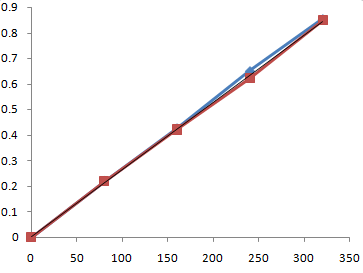
Day -1
Table 5.2 Results of absorbance of water kefir on day -1
|
s.no |
Concentration (?g/ml) |
Absorbance (nm) (standard) |
Absorbance (nm) (sample) |
|
1. |
0 |
0 |
0 |
|
2. |
80 |
0.220 |
0.220 |
|
3. |
160 |
0.426 |
0.421 |
|
4. |
240 |
0.650 |
0.622 |
|
5. |
320 |
0.854 |
0.849 |
| ? |
? ?? ?? ? ? ?
? ? ? ? ? ? 
? ? ? ?
Fig no.4.2 Calibration curve for standard vs sample day 1
Day -2
? ? ? ?
? ? ? ? ? ? 
? ? ? ?
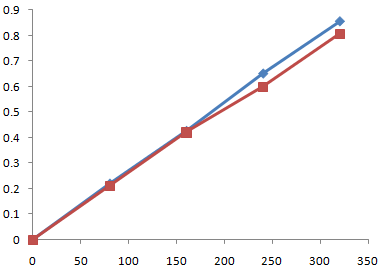
Fig no.4.3 Calibration curve for standard vs sample day 2
Table 5.3 Results of absorbance of water kefir only day-2
|
s.no |
Concentration (?g/ml) |
Absorbance? in nm (standard) |
Absorbance? (nm) (sample) |
|
1. |
0 |
0 |
0 |
|
2. |
80 |
0.220 |
0.150 |
|
3. |
160 |
0.426 |
0.353 |
|
4. |
240 |
0.650 |
0.499 |
|
5. |
320 |
0.854 |
0.687 |
Day -3
? ? ? ?
? ? ? ? ? ? 
? ? ? ?
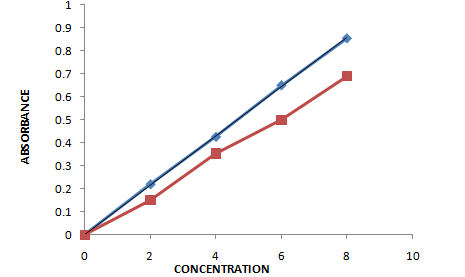
Fig no.4.3 Calibration curve for standard vs sample day 3
Table 5.3 Results of absorbance of water kefir only day-3
|
s.no |
Concentration (?g/ml) |
Absorbance? ( nm) (standard) |
|
1. |
0 |
0 |
|
2. |
80 |
0.195 |
|
3. |
160 |
0.369 |
|
4. |
240 |
0.561 |
|
5. |
320 |
0.722 |
ESTIMATION OF ABSORBANCE OF SUGAR CONCENTRATION IN MILK KEFIR
Standard
Table 5.5 Results of absorbance of standard lactose
? ? ? ?
? ? ? ? ? ? 
? ? ? ?
Fig no.4.4 Calibration curve for milk standard
Day -1
Table 5.6 Results of absorbance of milk kefir on day-1
? ? ? ?
? ? ? ? ? ? 
? ? ? ?
Fig no.4.5 Calibration curve for milk standard vs sample day1
Day -2
Table 5.7 Results of absorbance of milk kefir on day -2
|
s.no |
Concentration (?g/ml) |
Absorbance? in nm (standard) |
Absorbance? (nm) (sample) |
|
1. |
0 |
0 |
0 |
|
2. |
80 |
0.195 |
0.174 |
|
3. |
160 |
0.369 |
0.344 |
|
4. |
240 |
0.561 |
0.505 |
|
5. |
360 |
0.722 |
0.699 |
? ? ? ?
? ? ? ? ? ? 
? ? ? ?
Fig no.4.6 Calibration curve for milk standard vs sample day2
Day -3
Table 5.7 Results of absorbance of milk kefir on day-3
? ? ? ?
? ? ? ? ? ? 
? ? ? ?
Fig no.4.4 Calibration curve for milk standard vs sample day3
From the above graphs we can conclude that fermented kefir beverages have shown that there is reduction in sugar concentration when compared with standard.
SUMMARY AND CONCLUSION
Kefir grains have shown the ability to reduce sugar concentration during fermentation, with studies demonstrating a significant decrease in sugar content, such as a reduction of approximately 40?ter 96 hours of fermentation. The conversion of sucrose to glucose and fructose during fermentation contributes to this reduction, with variations observed in sugar content when kefir grains interact with different substrates like organic brown sugar The conversion of sucrose to simpler sugars like glucose and fructose, along with the interaction between kefir grains and various substrates, influences the sugar content in the final product. The fermentation process occurs when milk is combined with kefir grains and left to ferment at room temperature for several days. During this process, the kefir grains break down the lactose in the milk, creating lactic acid, alcohol, and acetic acid.??The water kefir grains utilize the sugar in the solution to produce lactic acid, carbon dioxide, and a small amount of ethanol. This process involves the breakdown of sucrose into simpler compounds like glucose and fructose by the microorganisms present in the grains.
REFERENCE


Rongali Indu*, Dr. M. Savitri, M. Swapna, B. Rama Madhuri, Dr. P. Uma Devi, Effect Of Milk and Water Kefir Granules in Sugar Solution, Int. J. Sci. R. Tech., 2024, 1 (11), 169-177. https://doi.org/10.5281/zenodo.14206456
 10.5281/zenodo.14206456