
Severity: Warning
Message: Undefined array key "articleIDUniqueCode"
Filename: frontend/article.php
Line Number: 189
Severity: 8192
Message: substr(): Passing null to parameter #1 ($string) of type string is deprecated
Filename: frontend/article.php
Line Number: 189
Severity: Warning
Message: Undefined array key "articleIDUniqueCode"
Filename: frontend/article.php
Line Number: 190
Severity: 8192
Message: substr(): Passing null to parameter #1 ($string) of type string is deprecated
Filename: frontend/article.php
Line Number: 190
Severity: Warning
Message: Undefined array key "articleIDUniqueCode"
Filename: frontend/article.php
Line Number: 213
Severity: 8192
Message: substr(): Passing null to parameter #1 ($string) of type string is deprecated
Filename: frontend/article.php
Line Number: 213
Severity: Warning
Message: Undefined array key "articleIDUniqueCode"
Filename: frontend/article.php
Line Number: 214
Severity: 8192
Message: substr(): Passing null to parameter #1 ($string) of type string is deprecated
Filename: frontend/article.php
Line Number: 214

We use cookies to ensure our website works properly and to personalise your experience. Cookies policy
Severity: Warning
Message: Undefined array key "articleIDUniqueCode"
Filename: frontend/article.php
Line Number: 424
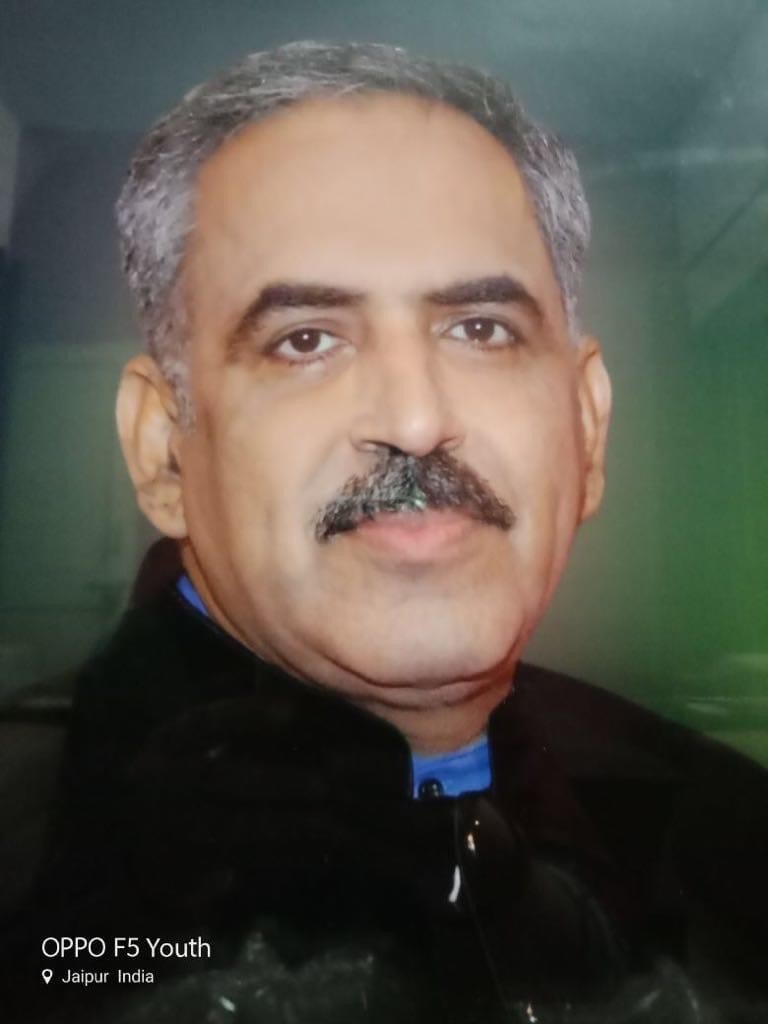
Professor of Geography, SBD Government College, Sardarshahar
Churu district in Rajasthan, located in the semi-arid Thar Desert region, possesses significant potential for solar energy due to high solar irradiation and abundant wasteland. Wind potential is more moderate but complementary for hybrid systems. This paper analyses the current status, future prospects up to 2030 and beyond, using available data, feasibility studies, and statistical insights. Rajasthan’s ambitious targets (90–125 GW RE by 2030) position Churu as a contributor through decentralized and utility-scale projects. Key challenges include grid evacuation, water scarcity, and land-use conflicts, while opportunities lie in PM-KUSUM, hybrids, and storage. Projections indicate solar could dominate locally, with economic benefits in jobs and farmer income.
Churu district (approx. 13,886 sq km, coordinates 27°24'–29°00'N, 73°40'–75°41'E) is a semi-arid area with extreme temperatures (up to 45°C+ in summer), low rainfall, and high sunshine. It forms a gateway to the Thar Desert and has significant uncultivable land ideal for renewables.
Rajasthan leads India in renewables (over 30-35 GW solar installed recently). State policies like the Rajasthan Integrated Clean Energy Policy 2024 (RICEP-2024) target massive scaling with incentives, storage, and Green Energy Corridors. Churu benefits from schemes like PM-KUSUM (solar pumps) and has existing/planned solar projects.
This analysis integrates resource data, project status, statistical projections, and visuals for a comprehensive view.
RESOURCE ASSESSMENT WITH DATA AND CHARTS
Churu enjoys one of the best solar regimes in India:
Chart 1: Approximate Monthly Average GHI in Churu District
(Values are representative based on regional Rajasthan data)

The chart shows peak GHI in April–June (~6.5–6.8 kWh/m²/day), supporting high summer generation. Annual average supports a Capacity Utilization Factor (CUF) of 18–22% for fixed-tilt PV systems (higher with tracking). This outperforms many Indian regions (national avg. often 4–5 kWh/m²/day). High GHI reduces LCOE (Levelized Cost of Energy), making projects economically attractive. Dust accumulation (common in desert) requires regular cleaning, impacting O&M costs by 1–2%.
Existing and Pipeline Projects:
Land availability: Large areas of wasteland and sandy terrain minimize displacement risks, though grazing and biodiversity (e.g., desert ecosystems) need management.
Rajasthan’s total wind potential is 284 GW at 150m hub height (one of India’s highest). Churu has moderate winds (avg. 4–6+ m/s in pockets, stronger in non-monsoon), lower than western districts like Jaisalmer. Wind complements solar (often stronger at night or different seasons).
State wind installed: ~5 GW (lagging solar). Hybrids are a key future strategy for grid stability.
Chart 2: Typical Capacity Utilization Factors (CUF)

Solar CUF in Churu (~20%) is competitive due to excellent irradiation. Rajasthan wind averages higher PLF (30–40% in prime sites) because of consistent winds. Combined hybrids can achieve better overall utilization and reduce variability. Statistical note: Higher CUF directly improves project economics (more kWh per MW installed).
STATISTICAL PROJECTIONS AND TRENDS
Chart 3: Projected RE Capacity Growth in Churu District (Illustrative Scenario)
(Based on state targets, current momentum, and proportional district share. Assumptions: 20–30% CAGR for solar, policy push for wind/hybrid.)

Detailed Explanation of Projections:
CHALLENGES AND OPPORTUNITIES
Challenges:
Opportunities:
RECOMMENDATIONS
Skill training in RE tech for local youth.
CONCLUSION
Churu district has a bright renewable future, led by solar with wind/hybrid support. Visuals and data confirm technical and economic viability. With proactive policy execution, grid upgrades, and sustainable practices, Churu can generate clean power, create prosperity, and contribute to India’s 500 GW non-fossil target. This transition is not just energy-focused but a pathway to resilient, low-carbon development in arid Rajasthan.
REFERENCES
M. A. Khan*, Future Of Solar And Wind Energy In Churu District, Rajasthan: An Analysis, Int. J. Sci. R. Tech., 2026, 3 (5), 382-385. https://doi.org/10.5281/zenodo.20094289
 10.5281/zenodo.20094289